

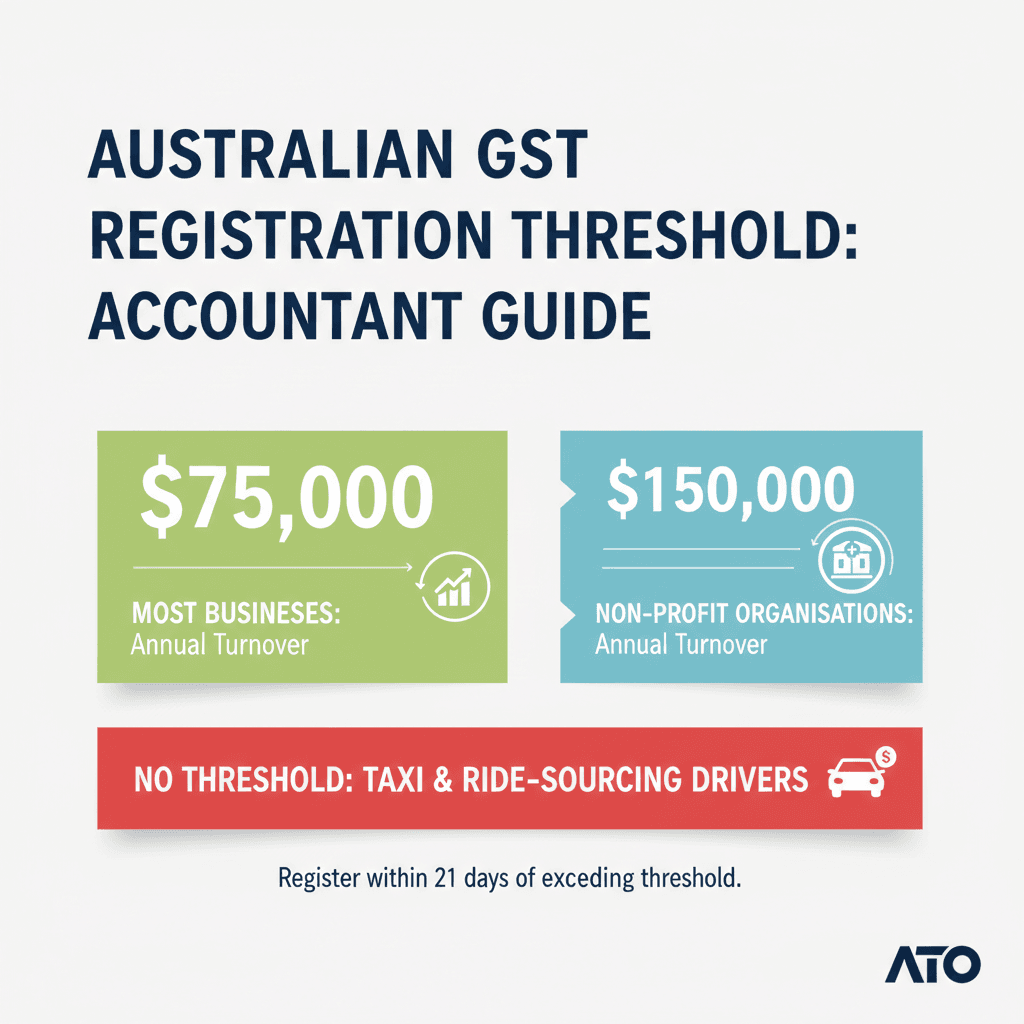
If you are searching "GST registration threshold Australia," the short answer is that a business must register for GST once its GST turnover reaches $75,000 or more, with a higher $150,000 threshold for non-profit organisations. But for an accountant advising clients, the threshold figure is the easy part. Where registration actually goes wrong is in what counts toward turnover, and in the timing, because the test is forward-looking as well as backward-looking, and getting the timing wrong creates a backdated GST liability that the client, not the customer, ends up paying.
How the turnover test actually works
The threshold is measured two ways, and a business meets it if either one is triggered. Current GST turnover is the total for the current month plus the previous 11 months. Projected GST turnover is the total for the current month plus the next 11 months. This forward-looking projection is the one that catches clients out, because it means registration can be required before a single dollar of the income has landed. A consultant who signs a six-month contract at $15,000 a month has a projected turnover well over $75,000 the day they sign, and must register within 21 days of that point, even if their prior year was minimal. Once either test is met, the 21-day clock starts.
Two other points define the boundary. First, turnover means gross business income, not profit, and it generally excludes input-taxed supplies such as residential rent and most financial supplies, which matters a lot for a client who runs a business and also holds an investment property, because the rent does not count toward the threshold but the business income does. Second, some clients must register regardless of turnover: anyone providing taxi, limousine or ride-sourcing services (Uber, DiDi and similar) has to be registered from their first dollar, with no threshold at all. That one routinely surprises part-time rideshare drivers, and it is worth flagging with any client who has a side gig you might not have asked about.
Why the timing is where the real cost sits
The expensive mistake is registering late. If a client should have registered and did not, the ATO can backdate the registration to the date the obligation arose, and the client then owes GST on every sale made since that date, even though they never charged GST to those customers. In practice they absorb one eleventh of that income out of money already spent, and penalties and interest can sit on top. Backdating is limited to four years, but four years of unremitted GST is a serious liability, and it is entirely avoidable with monitoring. This is also why voluntary registration below the threshold is a real decision, not a default: registering early to claim GST credits on high setup costs can genuinely help a startup's cash flow, but it commits the client to full BAS obligations and a minimum 12-month registration, so it should be a considered choice rather than something that happens by accident.
How to get registration timing right
The practical rule is to monitor both turnover figures monthly rather than discovering the breach at the annual review, because by then the 21-day window is long gone and the liability has been quietly accruing. Watch projected turnover in particular, since a new contract or a strong run can trigger the obligation before the historical numbers show it. Confirm what actually counts toward turnover for each client, especially where input-taxed income like residential rent is in the mix, and check whether any client falls into the register-regardless categories. It is far cheaper to register a client correctly on time than to unwind months of backdated GST, corrective BAS lodgements, penalties and interest after the fact. The threshold itself rarely changes. The mistakes are almost always about noticing the crossing late.