
Australian accounting has already made one big shift, from desktop software to the cloud. For firms in 2026, cloud access is no longer the frontier, it is the floor. The manual ledger tools most firms run on changed how accounting data is accessed, but they did not change how it is processed, and they still depend on a person to do the preparation work before the software can do anything useful. The firms pulling ahead now are moving from cloud-native to AI-native, and the outcome they are chasing has a specific name: margin recovery, the reclaiming of the billable hours that manual preparation quietly consumes.
Why cloud accounting is no longer the ceiling
The move from desktop to cloud changed accessibility. It did not change the underlying model, which still assumes a qualified person will clean the data, key in the entries, and nurse the reconciliation to completion. Accessibility is now simply expected, so the question a growing firm asks is no longer "can my team reach the file from anywhere," it is "how much of the preparation work can the software do before a person needs to be involved at all." That is the real line between cloud-native and AI-native software, and it is where the hours, and the margin, are won or lost.
The hidden friction in a manual ledger workflow
Firms have long treated manual bottlenecks as just part of the job. Bank feeds break, data entry needs constant checking, and reconciliation stalls waiting for a missing piece. Individually these feel like minor technical annoyances, but the cumulative effect is a large, invisible loss of billable capacity. When a senior spends hours cleaning a CSV export or manually verifying transactions, that is not high-value work, and it is not what clients pay for. The person has become the bridge for software that cannot finish the job on its own, and every hour spent being that bridge is an hour not spent on advice, review, or client relationships.
How Ezyiah compares to a manual ledger
The difference is not that Ezyiah adds an assistant to the existing model. It is that the preparation work itself is done by AI, then handed to the accountant for review, rather than done by the accountant from scratch.
- Preparation: a manual ledger relies on assisted, largely manual data entry. Ezyiah does the categorisation and reconciliation with AI, then presents it for review.
- Reconciliation: a manual ledger uses rules that break when a supplier, format, or narration changes. Ezyiah reconciles using AI pattern recognition and our original AI Memory feature, which learns each client's coding preferences over time.
- Compliance focus: a manual ledger is built for general record-keeping across many markets. Ezyiah is built for the Australian market, with BAS, GST, TPAR and depreciation logic trained by real tax professionals.
- Control: in both, the professional signs off, but in Ezyiah the accountant reviews AI-prepared work rather than producing it by hand. Everything stays fully editable before export, and the accountant has the final say on every single line.
- Primary outcome: a manual ledger delivers accessibility. Ezyiah delivers margin recovery.
AI-native is not the same as an AI feature bolted on
Many manual ledger tools are now adding AI as an assistant or add-on. Those features might suggest a category or summarise a report, but the engine underneath is unchanged, so the accountant still triggers each step and waits for a suggestion. Ezyiah is built the other way around. The AI is not a feature sitting on top of the old model, it is the engine that does the preparation, and the accountant's role moves to the front of the value chain: reviewing, correcting, and approving AI-prepared work instead of assembling it line by line. That is a genuine change in where a professional's time goes, and it is the change that makes the numbers work.
What margin recovery actually means
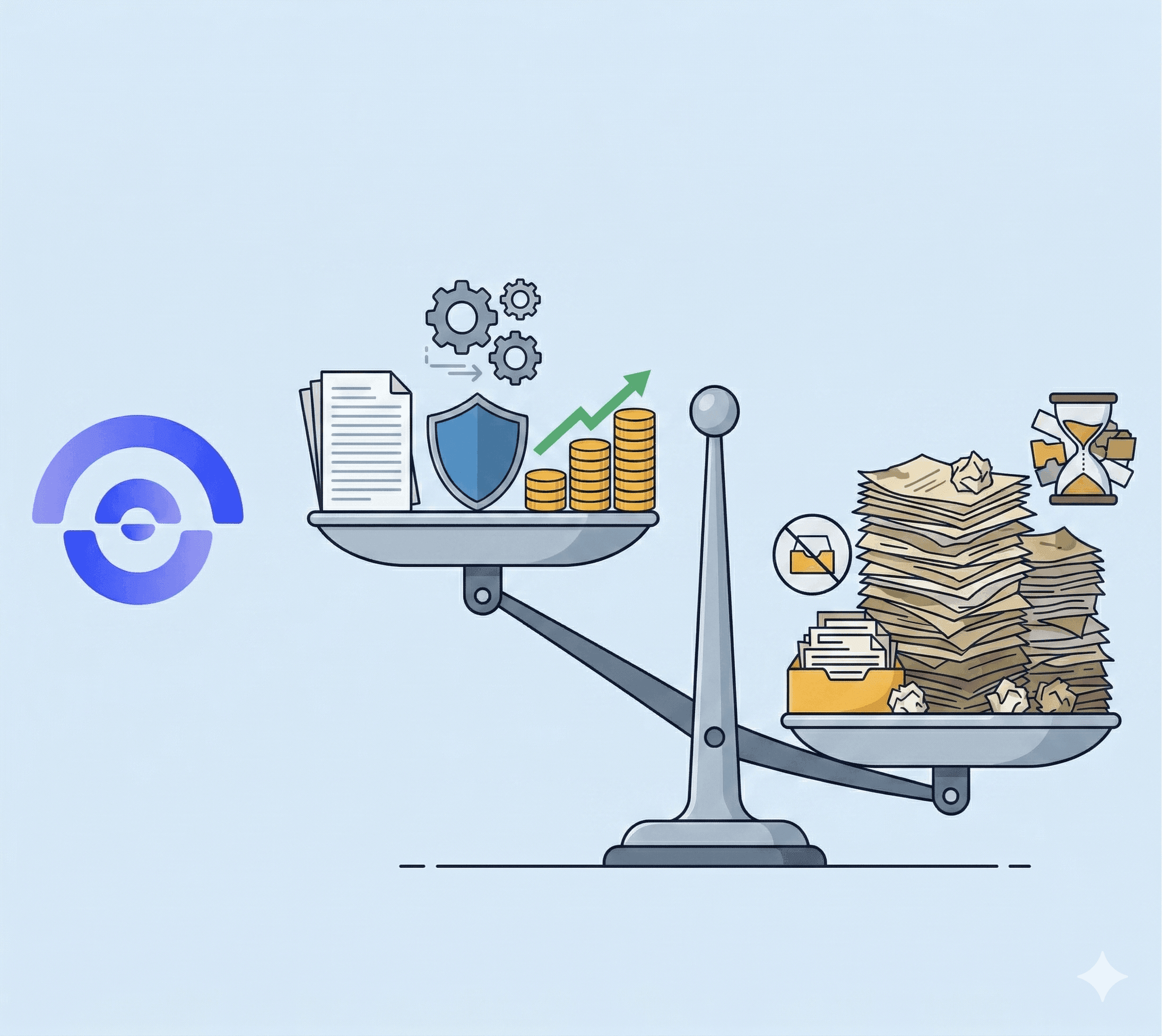
Efficiency is a vague word. Margin recovery is a specific financial outcome: reclaiming the unbillable hours previously lost to manual preparation. When the preparation work no longer consumes senior time, the unit economics of a job change. Work that was low-margin because of high administrative friction becomes genuinely profitable, and a firm can grow its output without adding headcount in lockstep. This is the practical answer to the two pressures every firm feels at once, a tight talent market and rising compliance volume: do more of the work with the people you already have, because the software carries the preparation and your team carries the judgement.
Built for Australian compliance, not adapted to it
Unlike global tools that treat Australian tax logic as something to configure after the fact, Ezyiah is built for the Australian market from the ground up. AI BAS preparation applies GST logic and produces ATO-ready financial reports. AI TPAR streamlines contractor reporting without the manual hunt for data. And AI reconciliation handles the messy Australian bank CSV and PDF formats that cause so many sync breakages in a manual ledger, with our original AI Memory feature getting more accurate on each client's workings the more it is used.
From processor to advisor, without giving up control
Moving from a manual ledger to Ezyiah is more than a software switch, it is a strategic decision about where a firm's people spend their time. As AI handles more of the heavy lifting of data preparation, the accountant's role shifts from processor to advisor, but that shift only works because control never leaves the professional. The firms that adapt to AI will outgrow the ones that do not, not because AI replaces their judgement, but because it removes the low-margin preparation work that was holding that judgement back. Ezyiah provides the infrastructure for that shift: the preparation done by AI, every line reviewable and editable, and the final say always with the accountant.
Ezyiah is a business expense and 100% tax deductible for Australian accounting professionals.