

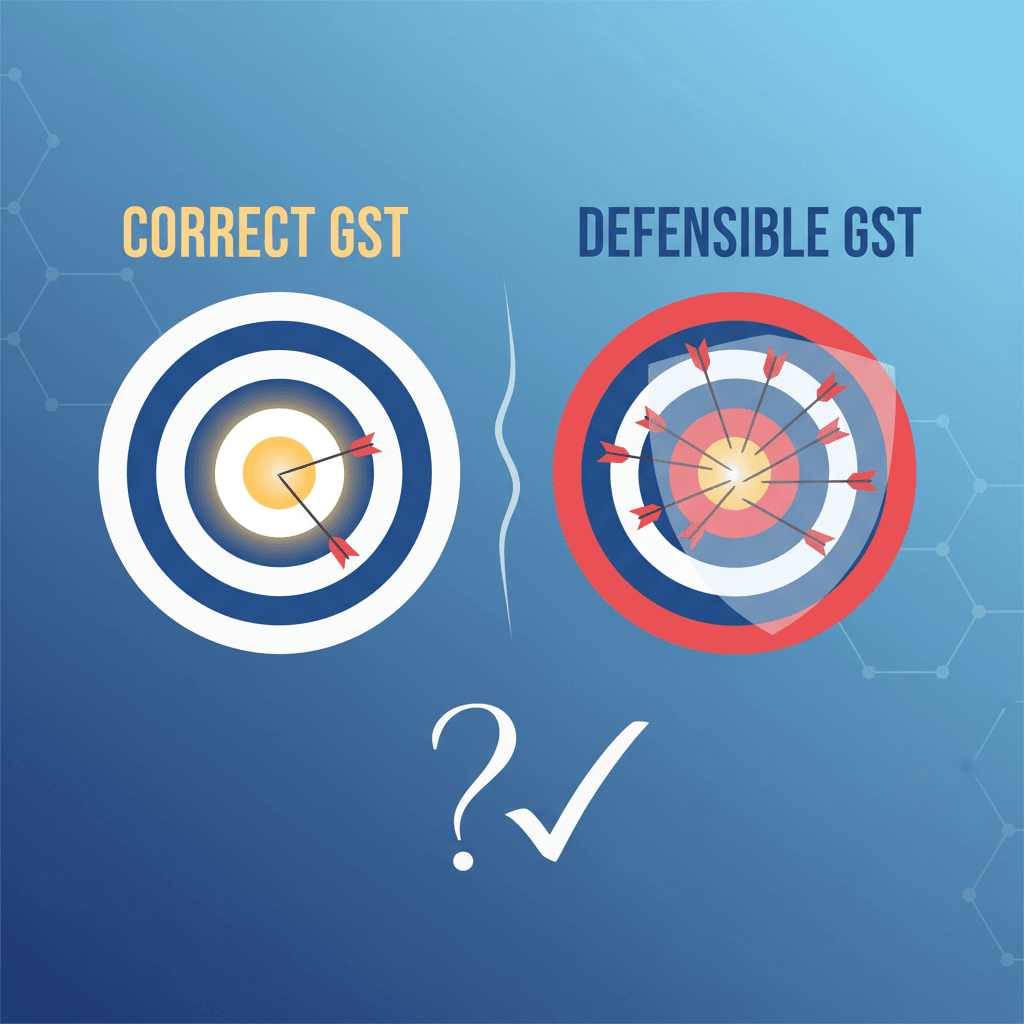
When accountants say GST is "correct," they usually mean the numbers add up. The GST on sales is calculated properly, the GST on purchases is claimed against tax invoices, and the BAS balances to the ledger. On paper, that is correct GST, and most of the time it is all anyone checks. But anyone searching "GST correct but BAS audit risk" has already sensed the gap, because their worry is not arithmetic. It is whether the position they have taken can be explained if someone asks. That is the difference between correct GST and defensible GST, and it is a real distinction: correct GST is about the calculation, defensible GST is about the justification behind it. A number can be right and still be fragile, if the reasoning that produced it cannot be reconstructed.
Why a correct number can still be indefensible
The gap shows up wherever GST involves a judgement rather than a straight calculation, which is more often than people think. Mixed-use expenses are the clearest case. A business-use percentage might be applied and the maths might be flawless, but if that percentage changes each quarter with nothing documenting why, the position is correct in each period and indefensible across them, because there is no method a reviewer can follow. Fuel tax credits are the same. A claim can be right in theory, but if there is no record of how eligibility and the business-use split were determined, the correctness lives only in the preparer's head, which is no help six months later. Director loans make the point over time: coded properly this quarter, but if earlier quarters treated the same transactions differently, the inconsistency itself becomes the exposure, regardless of whether today's entry is accurate.
What connects these is that defensibility is not a property of a single number, it is a property of the process behind it. The ATO, and any senior reviewer, tends to look at trends and documentation rather than isolated totals, so GST treatment that shifts across periods without a stated reason raises questions even when every individual figure is defensible on its own. This is why "it balances" is never the whole answer. Balancing proves the arithmetic. It says nothing about whether the same transaction type was treated the same way last quarter, or whether the method behind a claim could be explained to someone who was not in the room when the decision was made.
The test that separates the two
There is a simple way to tell whether a GST position is defensible or merely correct. Imagine someone asks, six months from now, why a particular GST amount was claimed. Can you trace it back to a tax invoice, a stated calculation method, and a consistent process applied the same way across periods? If yes, it is defensible, and a review is a short conversation. If the answer is "it was right at the time, but I would have to work out why again," it is fragile, and that is the moment a routine query turns into a longer one. The correctness has not changed. What is missing is the evidence and the consistency that let the correctness speak for itself.
This is why preparing a BAS should not stop at "is this figure accurate today." The more useful question is whether it would still make sense to an outside reviewer later, without you there to explain it. Getting there is not complicated, but it is deliberate: clean transactions so the source is sound, consistent coding so similar things are treated similarly, and documented reasoning for any adjustment that involves judgement, captured while the context is fresh rather than reconstructed under scrutiny. Do that, and correct GST becomes defensible GST, which is the only kind that actually protects the firm when someone finally asks the question.